
Door‑Handle Hazards Prompt Vehicle Recalls(August 24)
Multiple Vehicle Models Recalled: What Hidden Risks Lie in Concealed Door Handles?
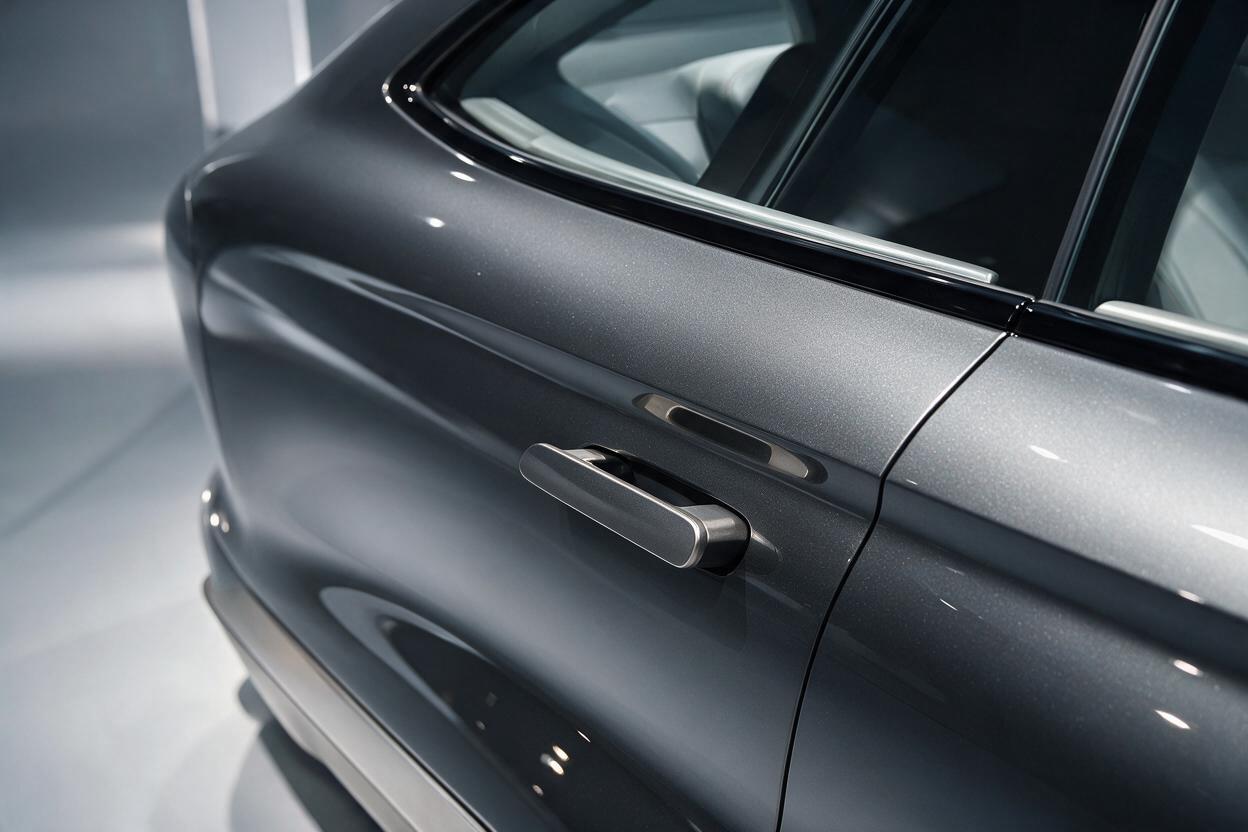
Recently, the State Administration for Market Regulation centrally issued automobile recall announcements, with Tesla, Xiaomi, Xpeng, Leapmotor, and seven other automakers simultaneously launching recalls covering millions of new energy vehicles. The core reason for this recall is highly uniform: the interior emergency mechanical handles are too close in color to the interior trim, with insufficient recognizability, which may affect occupant escape and external rescue in extreme collision power-loss scenarios.
Why does a seemingly inconspicuous interior detail trigger an industry-wide collective rectification of rare scale? Is the minimalist design and hidden configuration prevalent in new energy vehicles challenging safety baselines? What changes will the mandatory national standard for door handles, landing in 2027, bring to the industry?
The Life-Saving Backup Hidden in the Door: Why It Must Not Be Invisible
On new energy vehicle models that generally use electric door opening, the interior emergency mechanical handle is a purely mechanical structure completely independent of the electronic control system, and it is the last line of defense for escape in extreme emergencies. According to automotive industry expert Li Yang, unlike traditional fuel vehicles with directly exposed mechanical door handles, the installation position of emergency handles on new energy vehicles has no unified standard: some are hidden inside door storage compartments, some are embedded in door panels on the inner side of armrests, usually covered with same-color small covers that can be pried open to directly unlock the door via mechanical cables. Its sole usage scenario is in extreme situations where the vehicle low-voltage system fails due to severe collision, water submersion, and the like, when the electric door opening button completely fails, the mechanical handle can still achieve physical unlocking.
This recall classifies similar color and difficulty to identify as a safety hazard, which is not making a fuss over nothing. In emergency scenarios such as collisions and water submersion, occupants are often in a state of panic with limited visibility, and the golden escape window is often only a few seconds. If emergency components blend with the interior and are difficult to locate quickly, it will directly delay escape timing. Most automakers rectification plans involve applying conspicuous warning labels and OTA-upgrading the post-accident auto window-lowering strategy, the former improving component recognizability while the latter adds an escape channel in extreme scenarios, reducing safety risks from both dimensions.
Minimalist Design Trend: When Aesthetics Meet Safety, Where Is the Baseline?
The 9 companies involved in this recall are primarily new energy brands, with highly concentrated similar defects, which is by no means coincidental. Behind this phenomenon is the minimalist integrated design trend prevalent in the new energy vehicle industry. To reduce drag coefficients and improve range, while creating a more tech-forward interior visual effect, hidden door handles, full touch-screen centers, and button-free designs have gradually become industry mainstream. Many models, to maintain visual simplicity and unity, have incorporated emergency operating components into the invisible design scope, changing from exposed to embedded and color-matched, making safety components yield to overall styling.
Li Yang stated that aesthetic iteration itself is not objectionable, but automotive product design must be predicated on safety. In recent years, some automakers have shown a tendency to prioritize emotional value over functional safety: removing front fog lights, removing rear wipers on hatchback and fastback models, drastically cutting physical function buttons. Many practical safety configurations have given way to styling. This logic of professional design chasing mass aesthetics is essentially an irrational catering to user demands, and has led to the continuous weakening of some basic safety details.
Mandatory National Standard Landing Next Year: Drawing Safety Red Lines for Abnormal Innovation
Notably, China first mandatory national standard for automobile door handles and emergency opening devices, Technical Safety Requirements for Automobile Door Handles (GB 48001-2026), will officially take effect on January 1, 2027, clearly requiring that emergency opening devices must be designed with sufficient recognizability and operability, and that their installation positions, identification marks, and operating force must meet specified standards. This standard will provide a clear regulatory basis for curbing design practices that sacrifice safety for aesthetics.
This platform focuses on the import and export of Chinese automotive equipment, gathering hundreds of certified Chinese automotive suppliers and connecting with global buyers. The platform achieves full transaction transparency, expands diverse cooperation opportunities, and helps both domestic and foreign parties build deep and stable cooperation bonds. Whether you are looking for vehicle manufacturers, purchasing automotive parts, or need customized procurement solutions, CNAUTO is your trusted first choice for cooperation.




