Based on your request, here is the translation: "Taking the Port as the Foundation, Seeking the Path to the Sea—Written on the Sixth Anniversary of the Establishment of Fujian Port Group
The sea breeze is strong, the giant ship breaks through the waves; the tide rises in the southeast, and the great port is renewed.
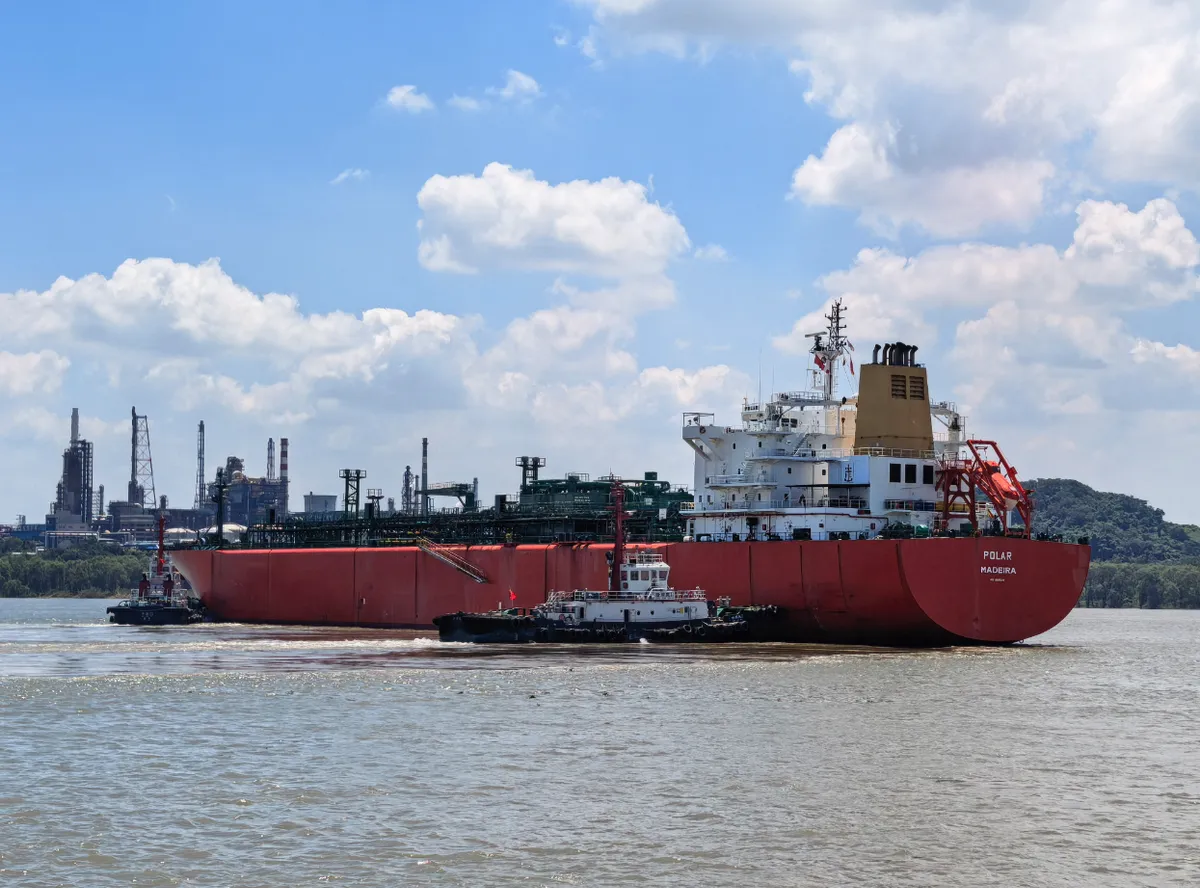
From Dongshan Bay in the south to Sanduao in the north, the winding coastline of Fujian is dotted with deep-water ports, each with its unique charm. On the blue waves, giant ships ride the tides, whistles echo through the sky, and goods are efficiently distributed—this scene of prosperity vividly illustrates the success of integrating Fujian's port resources.
In August 2020, Fujian Port Group was officially established. This was a significant initiative by the Fujian Provincial Party Committee and Provincial Government to thoroughly implement the important speeches and instructions of General Secretary Xi Jinping, focusing on the strategic goal of "building a world-class modern port cluster." As a "key move" in optimizing port resource allocation and promoting high-quality marine economic development in Fujian, this provincial-level port "carrier" has, over the past six years, established a new open pattern of "one chessboard for all ports in the province" in the core area of the "21st Century Maritime Silk Road." It has accelerated the construction of world-class ports, advanced national strategies, empowered regional development, and made significant contributions to the Belt and Road Initiative, cross-strait integration, domestic and international dual circulation, and local economic development.

Strengthening the Foundation and Enhancing Capabilities
Promoting Port Capability Upgrades
Over the past six years, Fujian Port Group has driven the deep integration of port resources across the province, optimized port area layouts, accelerated the integration of port, shipping, and trade, and achieved a historic leap from integration to fusion, and from scale expansion to a balance of quality and efficiency.
Infrastructure is the foundation of high-quality port development, and institutional mechanisms are the guarantee of efficient operations. Over the past six years, the Group has promoted the "one chessboard" development of ports across the province, completing the reorganization and integration of port resources in areas such as Zhangzhou, Quanzhou Xiaocuo, Fuzhou Luoyuan Bay, and Putian. With a cumulative investment of over 60 billion yuan, a number of key berths have been constructed and put into operation, adding over 52 million tons of port throughput capacity. In the first half of this year, six new berths began construction, and berths 18–21 at Ningde Zhangwan passed provincial-level acceptance for opening to the outside world.
While hard power continues to strengthen, soft power is also being upgraded. The Group has enhanced headquarters marketing, accelerated the construction of an integrated port, shipping, and trade system, and established three centers for dispatching and command, container operations, and bulk cargo. This has strengthened production scheduling, route coordination, and cargo organization. A coordination center for integrated port, shipping, and trade has been established, comprehensively improving port services, shipping logistics, road passenger transport, commercial trade, financial services, asphalt business, and financial escort services, thereby expanding the scale of integrated port, shipping, and trade business.
A series of construction and reform achievements are reflected in the continuously growing production and operational indicators. During the 14th Five-Year Plan period, the Group's total assets exceeded 120 billion yuan, with a cumulative growth of 41%, total profits increased by 80%, and port cargo throughput grew by 28%. In the first half of this year, all indicators showed steady growth, achieving a good start to the 15th Five-Year Plan.
Relying on mature port infrastructure and shipping resources, the Group has expanded new water-based cultural and tourism industries, injecting new momentum into the diversified development of ports. Following the success of the "Minjiang Reception Hall" high-end maritime tourism brand, a new batch of specialized ships has been built. In July 2026, the "Lujiang Reception Hall" successfully embarked on its maiden voyage in Xiamen. As a green and intelligent ship demonstration project by the Ministry of Industry and Information Technology, this ship combines green energy-saving, intelligent operation, and aesthetic experience. Its large-capacity battery pack enables a single charge to achieve a long-range voyage of 70 nautical miles. This not only enhances the high-end passenger ship brand system of the "Reception Hall" but also provides a high-quality model for the innovation of the province's electric ship industry and the construction of a green shipping system.
Recently, the World Bank and S&P Global jointly released the 2025 Global Container Port Performance Rankings, with Fuzhou Port ranking first globally. The port's outstanding performance in the core indicator of ship turnaround time highlights the global competitiveness of China's port operations—this is strong evidence of Fujian Port's six-year transformation and a clear testament to its leap from a "large port" to a "strong port."
Connecting the World
Building a Hardcore Hub Linking the Globe
Shipping routes are the "blue highways" connecting the domestic and international markets. Over six years of dedicated effort, Fujian Port Group has focused on strengthening the "Silk Road Maritime" brand, continuously increasing global shipping routes, improving the multimodal transport system, opening up international trade channels outward, and extending economic hinterlands inward. A trade network connecting the world is rapidly taking shape.
Looking outward, "Silk Road Maritime" has become a prominent international brand. Born in Fujian in 2018, it is China's first Belt and Road international integrated logistics service platform centered on shipping. Today, the alliance has grown to 375 members, with 148 named routes originating from over ten ports in Fujian, Guangxi, and other regions, reaching 150 ports in 48 countries and regions. The integration of port, shipping, and trade under the "Silk Road Maritime" initiative has been included in the national 15th Five-Year Plan, with the brand's influence and industry appeal continuously rising.
The shipping route network continues to expand. In the first half of this year, the Group added 17 new foreign trade routes, bringing the total number of routes to 261. Xiamen Port launched 16 new routes, including five long-haul routes, with double-digit growth in container volumes to emerging markets such as Southeast Asia, South America, and Africa. The Southeast Asia Singapore-Malaysia route NS5 was established, the Mediterranean Shipping Africa route "IROKO" was launched, and the China-South Africa Safe and Smart Trade Pilot Route was opened, broadening the trade channels.
Looking inward, multimodal transport is extending the reach of Fujian ports into the inland hinterlands. The Group has continuously improved sea-rail intermodal infrastructure, regularly launched cross-regional trains, and innovated "single document" end-to-end logistics services. During the 14th Five-Year Plan period, the Group's sea-rail intermodal volume tripled in three years; in the first half of this year, it grew by 25.3% year-on-year, and the Chengdu-Xiamen "Silk Road Maritime" train was successfully launched. Customized routes have been developed for key industries: the Xiamen Port-Jiangxi lithium spodumene sea-rail intermodal corridor reduced the logistics cycle for importing lithium spodumene from Nigeria from 70–90 days to 50 days; the Meizhou Bay Luoyu operation area leveraged the regular docking of 400,000-ton giant ships to ensure stable supply of iron ore raw materials for steel mills in Jiangxi and Hunan; the "Rizhao-Huajin" dedicated line opened a direct channel for Shanxi's industrial and mining products to reach Fujian's port enterprises, achieving seamless "door-to-door" connectivity. The Group has also established offices in key inland regions such as Jiangxi and Sichuan, as well as in Shanghai and Singapore, forming market development task forces and introducing measures such as intermodal fee reductions and end-to-end logistics packages, making Fujian ports a convenient gateway to the sea for China's central and western regions.
Large ports, large logistics, and large channels—Fujian is seamlessly connecting the "Maritime Silk Road" and "Land Silk Road" into a new southeastern land-sea corridor, providing high-quality services for domestic and international dual circulation. Goods flow in and out quickly, with seamless land-sea connectivity and mutual reinforcement. With key port areas as the "heart," a dense network of roads and railways acts as strong arteries, delivering maritime goods to inland industries and continuously exporting "Made in China" to the world.
Gathering Momentum for New Quality
Creating a New Growth Pole for the "New Three" Exports
The blue channel extends in all directions, bringing Fujian ports closer to the world. Amid the global green transition wave, new energy vehicles, lithium batteries, and photovoltaic products—the "New Three"—are becoming the strongest growth poles of China's foreign trade. The Group is seizing the opportunity, leveraging the advantages of port hubs, and striving to build an efficient port, shipping, and trade service system.
On August 22, the roll-on/roll-off ship "BYD Zhengzhou" departed from Fuzhou Port's Jiangyin Port Area, carrying over 6,000 new energy vehicles to Brazil. This voyage pushed Fuzhou Port's car exports this year to a new high of 50,000 vehicles—far exceeding the total for all of 2025, with a single voyage record also being set. In January this year, the Jiangyin Port Area had already achieved remarkable results: 3,889 domestically produced cars were shipped to the Middle East, and the "BYD Hefei" completed the roll-on/roll-off operation of 3,120 vehicles—achieving half of last year's total export volume in just the first month of the year. Fuzhou Port is visibly becoming the core hub for automobile exports along China's southeastern coast.
However, the "New Three" exports are not without challenges. Lithium batteries are classified as hazardous materials, and international shipping regulations are stringent. Companies once faced the dilemma of "having goods but no ships" or "having ships but no rules." Through the "Silk Road Maritime" alliance platform, the Group collaborated with maritime authorities to solve the problem. In 2024, the Xiamen Maritime Safety Administration, together with the Free Trade Zone and Port Administration, issued the nation's first safety transportation guidelines for containerized lithium battery energy storage systems at sea, filling a gap in international shipping regulations. Before this, Xiamen Port had already pioneered mixed stacking operations of hazardous and general cargo containers, significantly improving storage turnover efficiency and capacity. With a series of measures in place, companies' pre-port logistics costs per voyage have dropped by 75%.
With export challenges resolved, ocean voyages are also well-supported. The "Silk Road Maritime" global meteorological navigation service now covers various ship types, including bulk cargo ships, container ships, and chemical tankers, with service areas spanning the globe and an average route optimization rate of 30%. Bai Wenbin, Deputy Manager of the Operations Department of Silk Road Maritime Operations Co., Ltd., stated, "We provide safe, efficient, and green full-process escort services for the global maritime transportation of the 'New Three,' including all ports in Fujian."
The comprehensive service system has proven effective, with export data continuing to rise. The highlights include the rapid growth of Fuzhou Port's vehicle exports and record-breaking single voyages. In the first half of the year, Xiamen Port's "New Three" product categories grew by 58% year-on-year, with lithium battery exports increasing by 77%. Fujian ports have become a key hub for the international export of the "New Three."
Pursuing Innovation and Green Development
Empowering Port Transformation and Upgrading with Intelligence
Over the past six years, the Group has adhered to innovation-driven development, injecting continuous new momentum into high-quality port development through the practice of "pursuing innovation and green development, and advancing intelligently into the future."
At the Haicang Terminal in Xiamen Port, intelligent and automated bridge cranes and gantry cranes stand tall, while unmanned container trucks shuttle back and forth. Bridge crane operators have bid farewell to high-altitude cabins and can now remotely control gantry cranes from a central control room using screen joysticks, achieving precise operations. This terminal has become the nation's first traditional container terminal to undergo full operational chain intelligent transformation.
Behind this transformation is the independently developed artificial intelligence algorithm system of the Group's technology brand "Hairei Future." "In the past, precise positioning relied on a master's years of experience, but now artificial intelligence calculates it in advance, enabling automatic placement," explained Chen Zhiping, Party Secretary and Chairman of Fujian Port Group. This system is not only cost-effective but also highly replicable—it has been implemented in over 80 major domestic and international ports, with more than 3,500 units installed. Recently, the "Hairei Future" port equipment automation vertical domain model was included in Fujian Province's list of high-quality artificial intelligence vertical industry models.
The reach of intelligent technology also extends to management. The Group has established a digital legal affairs platform, an audit sharing center, and a financial sharing platform, enhancing management efficiency. The smart logistics platform has passed acceptance, integrating core container data from seven major ports within the Group for centralized aggregation and cross-system sharing. Fuzhou Port, leveraging intelligent transformation and smart supervision in its core port areas, has seen continuous improvements in operational efficiency. Invisible algorithms are reshaping visible efficiency.
The green development track is also accelerating. The Group actively supports the "dual carbon" goals, completing the construction of shore power facilities at ports, with four intelligent photovoltaic projects listed as demonstration projects by the Ministry of Industry and Information Technology. Haitan Terminal passed the five-star green port on-site evaluation, achieving the Group's first five-star green port milestone, while Jiangyin International Container Terminal passed the four-star evaluation. Port operation machinery, internal vehicles, and tugboats are gradually transitioning to new energy and clean energy. The nation's largest new energy tugboat fleet has been established in Fujian—from docks to ships, from shores to the sea, a new benchmark for green shipping stands tall.
Strengthening the Foundation and Forging the Soul
Leading High-Quality Development with High-Quality Party Building
Looking back on the six-year journey, every step of the Group's progress has been inseparable from a solid "foundation" and "soul"—adhering to the leadership of the Party and strengthening Party building. Over the past six years, the Group's Party Committee has fully played its role in "setting the direction, managing the overall situation, and ensuring implementation." Using the establishment of the Group as a new starting point, it has continuously optimized the setup of grassroots Party organizations, strengthened nearly 400 grassroots Party organizations, and carried out 309 "one branch, one project" activities, overcoming a series of key challenges in market expansion, project construction, and technological innovation. It has united and led nearly 40,000 cadres and employees to forge ahead and tackle difficulties. Over 300 collectives and individuals have received provincial or higher honors—a solid foundation of Party building provides strong political assurance for the Group's comprehensive high-quality development.
The wind rises in the southeast, and the tide rises with the sea. A port is not just a "door" but also a "road"—connecting the hinterland internally and reaching the oceans externally. Standing at the new starting point of the 15th Five-Year Plan, the Group will deeply study and implement the important speeches and instructions of General Secretary Xi Jinping, lead high-quality development with high-quality Party building, accelerate the construction of smart and green ports, actively build the "Silk Road Maritime" southeastern land-sea new corridor, and deepen the integrated development of port, shipping, and trade. It aims to take the lead and reach new heights in serving the Belt and Road Initiative and accelerating the construction of a transportation powerhouse.
"We will keep the 'big picture of the nation' in mind, unite efforts under the leadership of Party building, strive to build a world-class port group that fosters 'employee growth, customer trust, shareholder satisfaction, and social recognition,' and make greater contributions to accelerating the construction of a transportation powerhouse," said Chen Zhiping.
-
Strengthen the "four lines of defense" to fully ensure the safety of solid bulk cargo transport during the holiday by Tianjin Maritime Safety Administration4111
-
Tianjin Maritime Bureau solidly ensures safety supervision for oilfield shuttle ships over the National Day holiday.4505
-
Lianyungang Maritime Safety conducts waterborne joint patrol enforcement on the first day of National Day holiday4940
-
On the first day of the National Day holiday, Zhenjiang Maritime Bureau ensured the safe crossing of 33,500 passengers on the Zhenjiang section of the Yangtze River.4470
-
The first provincial-level crew industry party committee in northern China was established in Tianjin.4870