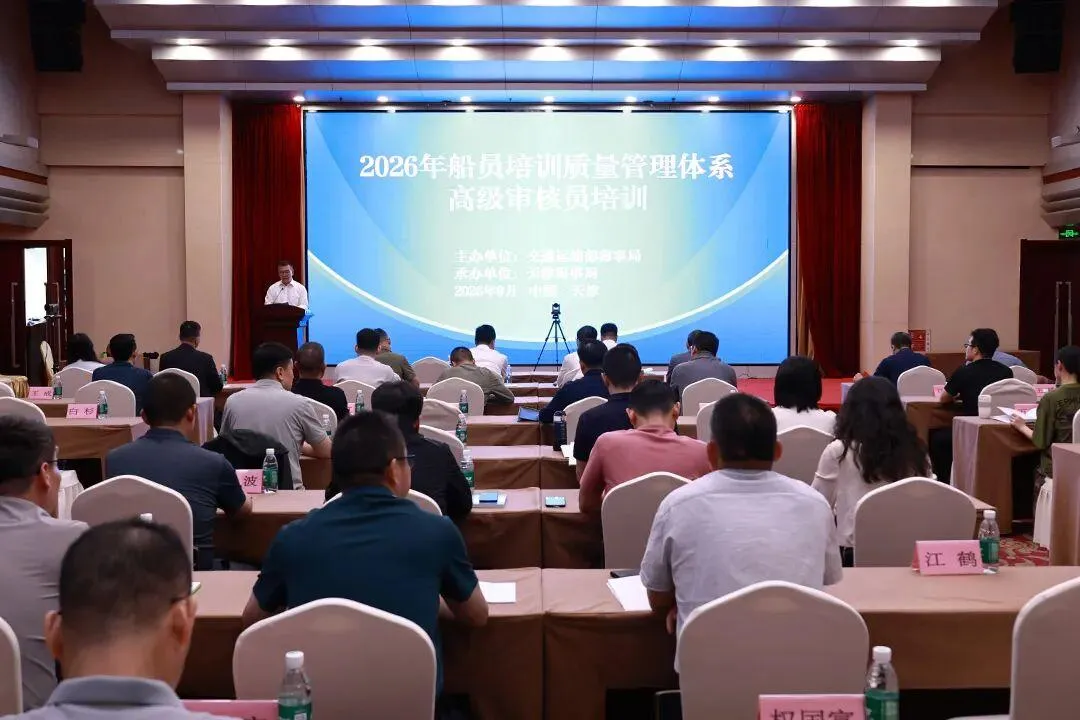
Shandong Province Jinan Ship Center is making every effort to advance the reform of ship re-registration within the province.
For a long time, inland vessels registered in Shandong have faced issues such as mandatory inspections upon transfer, repeated verifications, multiple points of contact, and sequential processes when adjusting operations or changing registration locations across cities. Enterprises often need to shuttle between the transferring and receiving ship inspection agencies, repeatedly submitting multiple sets of materials. Coupled with lengthy on-site inspections and archive transfer cycles, frequent vessel downtime awaiting inspection has resulted in high time and operational costs, becoming a significant bottleneck in improving the quality and efficiency of shipping enterprises in the jurisdiction.
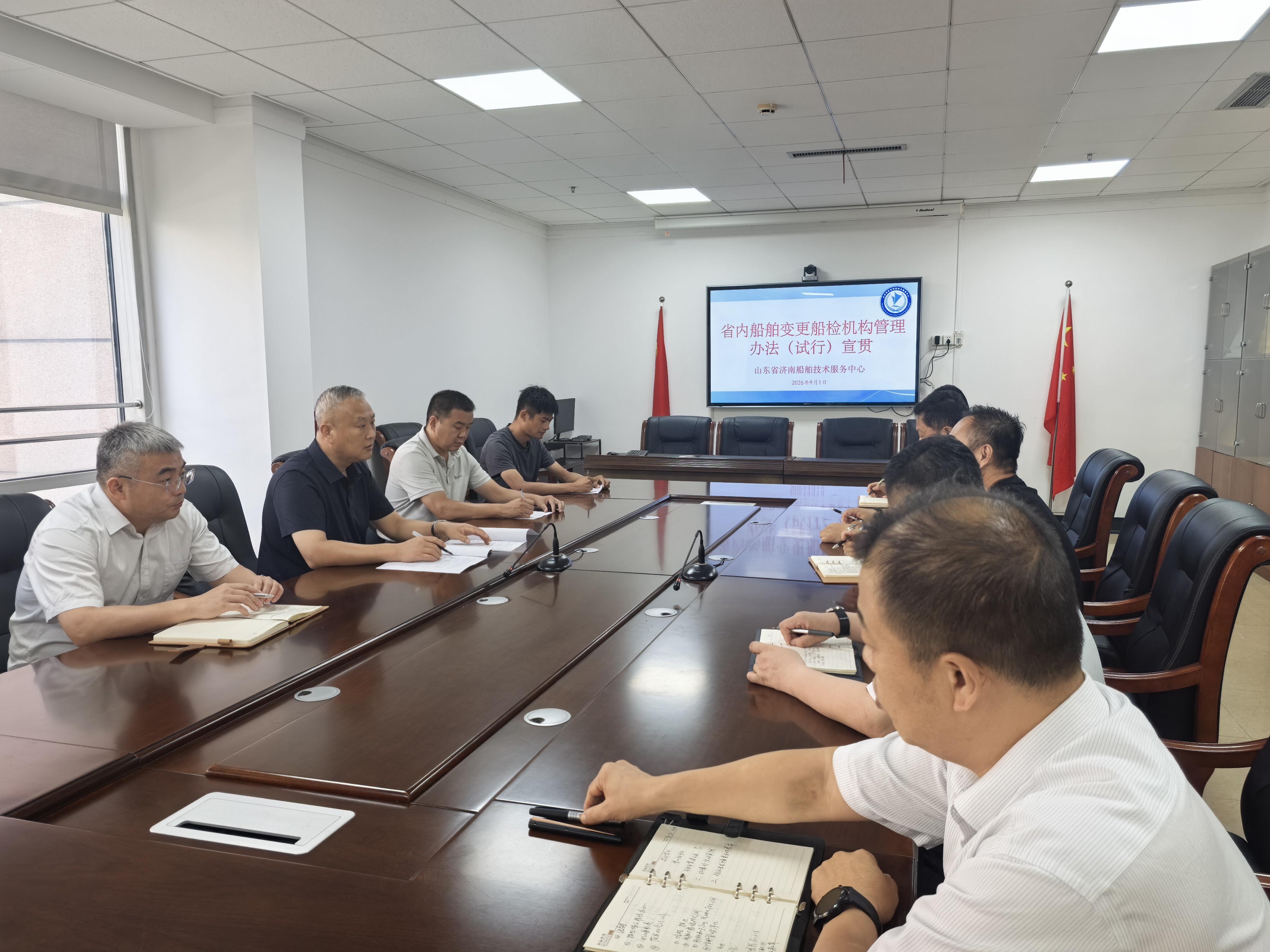
To thoroughly implement the State Council's reform directive of "efficiently completing one task," and fully enforce the new policy requirements of the "Shandong Province Management Measures for Changing Ship Inspection Agencies Within the Province (Trial)," the Jinan Ship Technical Service Center, based on the actual development of shipping in the jurisdiction, proactively aligned with the province-wide ship inspection integration reform deployment. By understanding, learning, testing, and advancing ahead of others, the center has restructured its processes with a focus on enterprise needs, striving to be a pioneer and model area for the province's ship transfer reform. Through solid implementation, it aims to contribute Jinan's experience and efforts to the province-wide ship inspection reform benefiting enterprises.
Understanding the essence of the new policy and building a standardized implementation system
As the forefront of Shandong Province's ship inspection reform implementation, the Jinan Ship Technical Service Center adheres to a system-first and standards-preceding approach. It promptly conducted specialized studies on the fifteen core contents of the new policy, deeply understanding the four major reform principles of "collaboration and efficiency, information sharing, convenience for the public, and clear responsibilities." Addressing previous issues such as inconsistent transfer processes within the province, non-standard timeframes, slow archive transfers, and uneven regional execution, the center strictly aligned with provincial-level top-level design. It refined implementation details, standardized job processes, and unified handling standards based on the operational structure of ships in the jurisdiction, enterprise habits, and daily regulatory characteristics.
The center strictly distinguishes between two handling scenarios: newly built ships and existing operational ships. It clearly defines acceptance conditions, negative lists, material specifications, and time requirements for each scenario. It fully implements a province-wide standardized document system, standardizing templates for application forms, correction notices, rejection notices, communication records, and archive transfers. This achieves standardized processes, streamlined material lists, regulated transfers, and specific responsibilities for ship transfer businesses in the jurisdiction, ensuring the provincial new policy is implemented without deviation, discount, or oversight in Jinan.
Restructuring processes and taking the lead in implementing the "inspection exemption and mutual recognition" reform benefits
The biggest breakthrough in this provincial ship transfer reform is achieving inspection exemption for compliant ships during transfer and mutual recognition of inspection results across the province, completely breaking the traditional model of "mandatory re-inspection upon transfer." Jinan Ship Inspection proactively advanced and fully implemented this core benefit measure, precisely releasing the reform dividends.
The center strictly enforces the differentiated control mechanism of the new policy, accurately defining the applicable scope: apart from ships on the "key attention list" for inspection credit, ships with unresolved major safety defects, or ships ordered to cease operations by maritime authorities, all compliant Shandong-registered ships holding valid inspection certificates are exempt from repeated on-site inspections during cross-regional transfers within the province. During the transfer-in process, only archive checks are conducted to verify the ship's status, certificate information, and technical parameters. If no discrepancies are found, a new inspection certificate with the same validity period is issued within five working days, with a standardized annotation explaining the exemption, ensuring traceability and accountability throughout the process.
Additionally, the center strictly adheres to rigid time requirements, completing archive reviews, verification reports, and process approvals for transfer-out businesses within five working days. It innovatively implements a dual-track archive transfer model of "online push + sealed mailing," strictly prohibiting shipowners from carrying archives themselves, eliminating risks of archive loss, tampering, or damage at the source, and fully ensuring the safety and integrity of ship technical archives.
Through process reengineering, ship transfers in the Jinan jurisdiction have bid farewell to the old model of "downtime awaiting inspection, repeated inspections, and multiple points of contact." Handling steps have been significantly streamlined, processing times greatly reduced, and enterprise operating costs markedly decreased, truly achieving "data runs more, enterprises run less, and ships experience less downtime."
Strictly adhering to safety boundaries and building a clear responsibility closed-loop supervision
Inspection exemption does not mean relaxed supervision, and streamlined processes must not compromise safety. This is the bottom line upheld by Jinan Ship Inspection in implementing the new policy.
The center strictly aligns with the provincial responsibility system, fully implementing the principle of "who inspects, who is responsible," and precisely delineates the safety responsibility boundaries for transfer-out and transfer-in businesses. It clarifies that the original inspection agency is responsible for the historical inspection quality, unresolved defects, and pre-transfer safety risks of the ship. After the transfer handover, strict implementation of archive checks, information comparisons, and status verifications ensures safety checkpoints throughout the process.
Meanwhile, the center rigorously enforces negative list management, firmly refusing to accept transfers for ships with unresolved defects, unlifted cessation orders, or abnormal credit records, safeguarding water traffic safety boundaries from the source. It resolutely breaks hidden regional barriers, strictly implements the province-wide "one chessboard" work requirement, and eliminates delays, artificial restrictions, and regional protectionism, fully ensuring the free, standardized, and orderly flow of ship elements across the province. Through strict supervision and excellent service, it achieves "open management, controlled supervision, and quality service."
Taking the lead as a demonstration, creating a replicable reform model for the province
The Jinan Ship Technical Service Center consistently strives to lead, demonstrate, and excel, proactively shouldering responsibility and advancing implementation in the province's new policy rollout.
Currently, the center has completed comprehensive policy training for all staff, process reengineering, document updates, window upgrades, and enterprise publicity, fully preparing for the normalized and standardized implementation of the new policy. Moving forward, Jinan Ship Inspection will continue to deepen reform iterations, actively addressing shortcomings in data sharing, scenario extension, and enterprise services. It will continue to engage shipping enterprises and frontline shipowners with targeted presentations and practical guidance, continuously optimizing the transfer service experience.
Additionally, the center will continue summarizing implementation experiences in the jurisdiction, refining standardized, replicable, and promotable Jinan implementation models. It will fully support the province's efforts in ship inspection integration, streamlined government services, and modernized industry governance. Through high-quality ship inspection services, it will safeguard the high-quality development of the inland shipping economy, contributing Jinan's wisdom, responsibility, and strength to the deep advancement of the province's "streamline administration, delegate power, strengthen regulation, and improve services" reform.
-
Strengthen the "four lines of defense" to fully ensure the safety of solid bulk cargo transport during the holiday by Tianjin Maritime Safety Administration4111
-
Tianjin Maritime Bureau solidly ensures safety supervision for oilfield shuttle ships over the National Day holiday.4505
-
Lianyungang Maritime Safety conducts waterborne joint patrol enforcement on the first day of National Day holiday4940
-
On the first day of the National Day holiday, Zhenjiang Maritime Bureau ensured the safe crossing of 33,500 passengers on the Zhenjiang section of the Yangtze River.4470
-
The first provincial-level crew industry party committee in northern China was established in Tianjin.4870